

Gulkand
Showing the single result
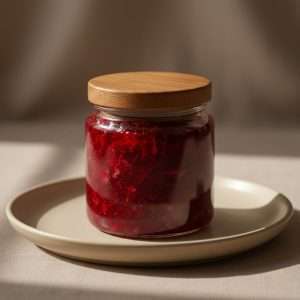
Kashmiri Gulkand: Pure Rose Petal Preserve from the Valley
Gulkand, the beloved rose petal preserve of Indian tradition, takes on an entirely new character when made the Kashmiri way. Kashmiri gulkand is crafted from hand-picked petals of the fragrant Damask rose (Rosa damascena) that blooms across the Kashmir Valley each spring, slow-set with pure raw honey and a careful blend of natural ingredients, and left to sun-mature until the petals yield their full sweetness and therapeutic potency. The result is a rich, fragrant preserve unlike anything available in mass-produced gulkand, deeper in colour, more layered in aroma, and rooted in a centuries-old tradition of Kashmiri food craft.
What is Gulkand? (Gulkand in English)
The word gulkand comes from the Persian-Urdu roots gul (flower/rose) and qand (sweet/sugar), literally meaning ‘rose sweet’ or ‘rose preserve.’ In English, gulkand is best described as a rose petal jam or rose petal confiture, though neither translation fully captures its depth. It is made by layering fresh rose petals with sugar or honey and allowing them to slow-mature in sunlight over several weeks, a process that coaxes out the full spectrum of the rose’s phytochemical richness.
Gulkand has been a cornerstone of Ayurvedic and Unani wellness traditions for centuries, valued as a natural coolant, digestive aid, and rejuvenating tonic. In Indian kitchens and medicine cabinets alike, it holds a place of quiet importance, a spoonful in warm milk, a filling in meetha paan, or a daily wellness ritual taken first thing in the morning.
Kashmiri gulkand elevates this tradition by starting with one of the finest rose varieties in the world, the Damask rose of Kashmir, and pairing it with pure Kashmiri ingredients instead of refined sugar.
What Makes Kashmiri Gulkand Different?
Most commercial gulkand is made from rose petals sourced from Kannauj or imported from Iran and Turkey, processed quickly and sweetened with refined white sugar. Kashmiri gulkand is different at every stage of its journey:
- The rose: Kashmir’s Damask rose (Rosa damascena) is considered among the world’s finest. Grown in the cool mountain air of the Valley, the petals are more fragrant, more pigment-rich, and more therapeutically potent than roses grown in hotter, drier climates.
- The sweetener: Kashmirica’s gulkand uses pure raw Kashmiri honey instead of refined sugar, making it a genuinely organic gulkand without the glycaemic load of conventional preserves.
- The method: Sun-maturation, the traditional slow process of setting gulkand in sealed jars under natural sunlight, is preserved in our recipe. This protects the heat-sensitive volatile compounds in rose petals that give gulkand its therapeutic value.
- The additions: Our recipe incorporates dry fruits and select spices in the Kashmiri tradition, giving the preserve a more complex, layered flavour that doubles as both a food and a functional wellness product.
The outcome is a pure gulkand, original in character, Kashmiri in soul, that carries the full integrity of its ingredients from field to jar.
Health Benefits of Gulkand — Ayurvedic and Modern Perspective
Gulkand is classified in Ayurveda as a ‘medhya rasayana’, a preparation that nourishes the mind and cools the body. Its primary active constituents (rose flavonoids, tannins, volatile oils, and the bioactive compounds in honey) underpin a wide range of traditional uses:
Natural Body Coolant
Gulkand is one of Ayurveda’s most trusted cooling agents. Regular consumption is traditionally recommended in summer to counter pitta (heat) imbalances, reducing internal heat, controlling excessive sweating, and cooling the digestive tract. Gulkand in summer is particularly effective when taken with cold milk or water.
Digestive Support
Rose petals have mild laxative and carminative properties that aid digestion and relieve constipation. A spoonful of gulkand in warm water or milk is a classic remedy for acidity, bloating, and irregular bowel movement.
Rich in Antioxidants
Damask rose petals are naturally high in flavonoids, polyphenols, and Vitamin C, compounds that neutralise free radicals and support cellular health. When preserved with raw honey (itself antioxidant-rich), Kashmiri gulkand becomes a potent, food-form antioxidant.
Stress Relief and Mental Calm
The aromatic compounds in rose, particularly geraniol and citronellol, have well-documented anxiolytic (anti-anxiety) properties. Rose-based preparations have been used in Unani medicine for centuries as mood stabilisers and natural nerve tonics.
Skin Health
The combination of rose phytonutrients and raw honey makes gulkand a traditional skin-brightening and purifying supplement. Regular consumption is associated in Ayurvedic practice with clearer skin, reduced blemishes, and a natural glow, attributed to the preparation’s blood-purifying and cooling effects.
Women’s Wellness
Gulkand is widely recommended in traditional medicine for managing menstrual discomfort, including cramps, mood changes, and excessive heat during the menstrual cycle. Its cooling and nervine properties make it particularly valued by women as a daily wellness food.
Note: Gulkand is a traditional food preparation with deep roots in Ayurvedic practice. It is not a pharmaceutical medicine. Consult a healthcare professional for specific health conditions.
How to Use Kashmiri Gulkand
Gulkand is incredibly versatile, it can be eaten straight from the jar, used as a natural sweetener, or incorporated into food and drinks:
- Daily wellness dose: 1–2 teaspoons of gulkand first thing in the morning, ideally on an empty stomach with warm milk or warm water
- Kashmiri kesar milk: Add a teaspoon of gulkand and a few strands of saffron to warm milk for a deeply nourishing bedtime drink
- Summer cooler: Stir into chilled rose water, lemonade, or lassi for a natural, fragrant cooling drink
- Meetha paan filling: The traditional use — a small spoonful spread inside a betel leaf paan
- Desserts: Use as a topping or filling for kulfi, ice cream, phirni, or shrikhand
- Breakfast: Spread on toast or roti, or swirl into yoghurt
- Gift: Kashmiri gulkand, especially in a presentation jar, makes a thoughtful, health-conscious gift rooted in tradition
Recommended daily amount: 1–2 teaspoons. Gulkand is naturally sweet and concentrated, a little goes a long way.
Gulkand Price
Gulkand price varies significantly based on the quality of roses used, the sweetener (sugar vs. honey), the production method (industrial vs. traditional sun-set), and whether the product contains additional ingredients. Mass-produced gulkand made with refined sugar and imported rose petals is available cheaply, but at considerable compromise to flavour and therapeutic value.
Kashmirica’s Kashmiri gulkand is priced to reflect genuine Kashmiri Damask rose petals, raw Kashmiri honey as the sweetener, and a traditional preparation method. The gulkand 1kg price and smaller pack pricing are available on the individual product page. For bulk orders (gifting, Ayurvedic practitioners, catering), contact us for wholesale pricing.
Why Buy Gulkand Online from Kashmirica?
- Made from Kashmiri Damask roses: one of the world’s finest rose varieties, grown in the Valley’s cool mountain climate
- Sweetened with raw Kashmiri honey: no refined sugar, making it a genuinely organic gulkand without sugar addition
- Traditional sun-maturation method: slow-set to preserve the full aromatic and therapeutic value of the rose petals
- No artificial preservatives, colours, or flavours: pure gulkand exactly as nature and tradition intended
- Made with dry fruits and Kashmiri spices: a richer, more nourishing formulation than plain rose-and-sugar gulkand
- Directly sourced from Kashmir: Kashmirica’s model eliminates middlemen, bringing you original gulkand at transparent prices
- 1,000+ five-star reviews from customers across India and 50+ countries worldwide
- 2.5% of profits go to underprivileged artisan communities in Kashmir